Tiny Drosera Spatulata: The Miniature Carnivorous Marvel


Plant Information
Tiny Drosera Spatulata: The Miniature Carnivorous Marvel

Drosera spatulata, commonly known as the spoon-leaved sundew or small sundew, is a fascinating perennial herbaceous plant that belongs to the Droseraceae family. It is a remarkable species that has captured the attention of botanists and nature enthusiasts alike due to its unique characteristics and survival strategies.

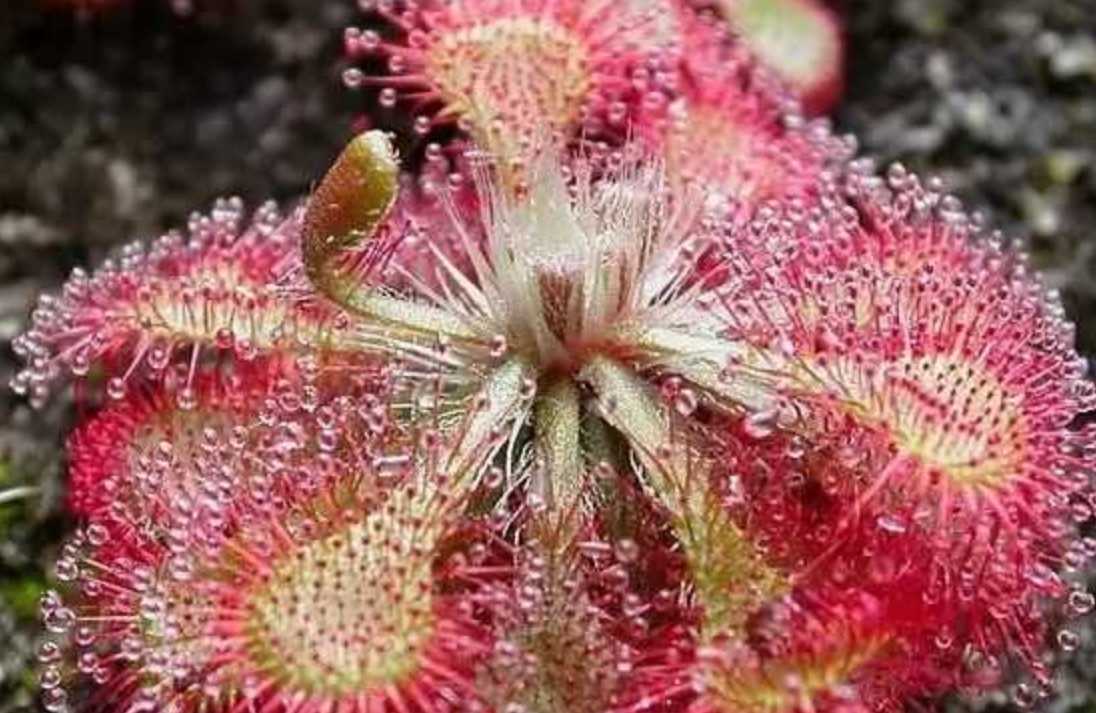
This plant is incredibly small, usually no more than a few centimeters in diameter, often compared to the size of a coin1. It lacks a distinct stem, and its roots are not well-developed. The leaves are spoon-shaped or spatulate, arranged in a rosette pattern, and are covered with numerous glandular hairs that secrete a sticky, glistening substance. This substance not only gives the plant a beautiful, jewel-like appearance but also serves as a deadly trap for small insects. When an insect lands on the leaf, it gets stuck in the sticky mucus, and the surrounding hairs gradually bend inwards to ensnare the prey further3. Digestive enzymes are then released to break down the insect and absorb the nutrients, providing the plant with essential nourishment that is scarce in its natural habitat3.


Drosera spatulata is native to a wide range of regions, including Southeast Asia, southern China, Japan, Micronesia, Papua New Guinea, eastern Australia, Tasmania, and New Zealand. It thrives in wet, boggy areas such as swamps, marshes, and along the edges of streams, where the soil is rich in moisture but poor in nutrients. In early summer, it produces delicate, slender flower stems that can reach up to 10-15 centimeters in height. Atop the stems, small white or pink flowers bloom in a one-sided racemose inflorescence. Each flower is relatively small, with five petals, and they play an important role in the plant's reproduction, relying on insects for pollination.


However, like many other unique plant species, Drosera spatulata is facing threats. Habitat destruction due to human activities such as urban development, agriculture, and logging is reducing the available habitats for this plant. Additionally, illegal collection for the horticultural trade and accidental damage from recreational activities also pose significant risks to its survival. Conservation efforts are underway to protect the natural habitats of Drosera spatulata and raise awareness about the importance of preserving these unique carnivorous plants. Botanical gardens and conservation organizations are working to cultivate and propagate the plant to ensure its long-term survival and to educate the public about its ecological significance.
Latest Stories
Astro Information2 minute readResembling a double-bladed lightsaber, this stunning Hubble Space Telescope image captures Herbig-Haro 24 (HH 24)—a half-light-year-wide jet erupting from a newborn star in the Orion B molecular cloud complex, ~1,300 light-years (400 parsecs) from Earth. HH 24 exemplifies the violent beauty of star birth, where invisible forces carve luminous pathways through interstellar space.
Feline News2 minute readThe Oriental Shorthair, a breed celebrated for its striking elegance and dynamic personality, traces its origins to mid-20th century breeding programs in the UK and the US2. Developed as a close relative of the Siamese, these cats emerged from intentional crossbreeding with British Shorthairs and Abyssinians to create a feline with the Siamese’s sleek physique but expanded coat color possibilities28. By the 1970s, the breed gained international recognition, captivating cat lovers worldwide with its unique charm.
Bird Information1 minute readLiving primarily in tropical oceans, frigatebirds boast wingspans exceeding 2 meters, with males sporting a distinctive red throat pouch that inflates like a scarlet balloon during courtship. These avian marvels are renowned for their ability to fly continuously for two months without touching water—even sleeping mid-air.
Feline News1 minute readNICOSIA, Cyprus – Roaming freely through the streets, ancient ruins, and coastal villages of Cyprus, a distinctive feline with amber or tabby coats has become an iconic symbol of the island. These are Cyprus cats, often hailed as "living fossils" and cherished as a unique part of the Mediterranean nation’s heritage.
Astro Information1 minute readSegue 2, a diminutive galaxy spanning just 220 light-years and hosting fewer than 1,000 stars, stands in stark contrast to giants like IC 1101—making it appear as cosmic "stardust." Scientists suspect this tiny entity is an early-universe "relic," gravitationally bound to the Milky Way, forever stunted in its growth.
Canine News2 minute readThe American Pit Bull Terrier originated in 19th-century England, initially bred by crossing bulldogs with terriers for blood sports like bull-baiting and dog fighting. In the mid-19th century, it arrived in the U.S. with immigrants and was gradually refined into a farm working dog and family companion. While not officially recognized by the American Kennel Club (AKC), it is registered as a distinct breed by the United Kennel Club (UKC) and the American Dog Breeders Association (ADBA
Feline News1 minute readThe Serengeti cat, a captivating breed celebrated for its striking resemblance to the African serval, has been gaining global attention among cat enthusiasts. Developed in the late 20th century through selective breeding—primarily crossing Bengal cats with Oriental Shorthairs—this breed was crafted to embody the grace of wild felines while maintaining a domesticated temperament.