Mysterious Ghost Orchid: A Rare Botanical Wonder


Plant Information
Mysterious Ghost Orchid: A Rare Botanical Wonder

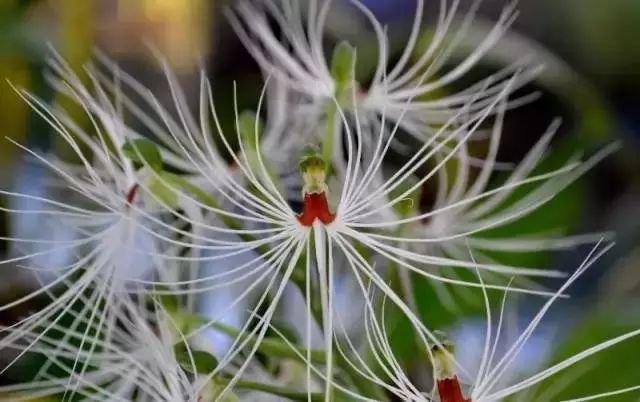
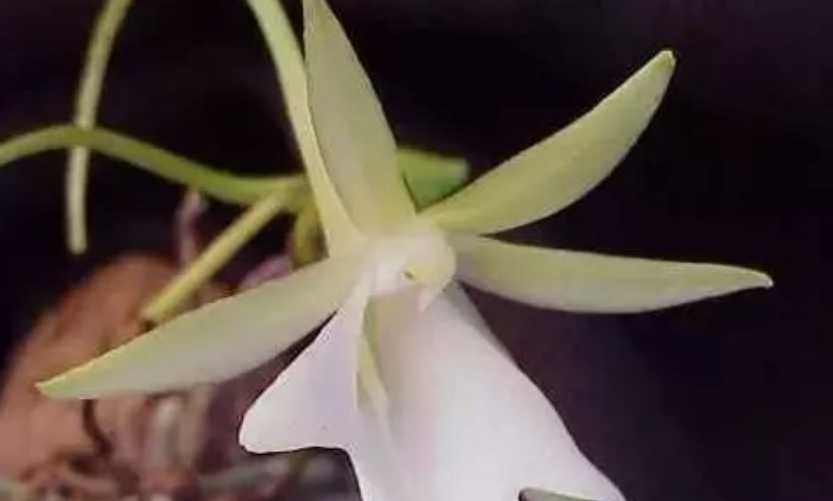
The Ghost Orchid, scientifically known as Dendrophylax lindenii, is a plant that has captured the imagination of people around the world with its unique and ethereal appearance. This rare orchid is native to the humid regions of Florida in the United States, as well as Cuba and the Bahamas.


What makes the Ghost Orchid truly stand out is its lack of leaves. Instead of using foliage to carry out photosynthesis, it has a unique adaptation. Its roots, which are often seen clinging to tree trunks, have the ability to produce sugars when exposed to sunlight. This process is quite different from that of most plants. The plant's white, delicate flowers seem to float in mid - air, as if they are the spirits of the forest. The name "Ghost Orchid" is derived from this very appearance, as the flower's pale color and the way it sways in the breeze resemble a ghostly apparition.


The Ghost Orchid's habitat is as unique as the plant itself. It thrives in the shaded, moist environments of swamps and forests. These areas provide the high humidity and filtered light that the orchid requires. However, due to habitat loss caused by human activities such as deforestation and urban expansion, the Ghost Orchid is now considered an endangered species. The destruction of its natural habitat has severely reduced its population, making it a rare sight in the wild.


Another interesting aspect of the Ghost Orchid is its reproductive process. For a long time, the mystery of its pollination puzzled botanists. Recent research has revealed that the Giant Sphinx Moth plays a crucial role in this process. The moth's long proboscis can reach deep into the orchid's long nectar spur, facilitating the transfer of pollen. This specialized relationship between the orchid and the moth is a fascinating example of co - evolution in nature.


Despite its endangered status, the Ghost Orchid continues to draw the attention of botanists, conservationists, and nature enthusiasts. Efforts are being made to protect its remaining habitats and to propagate the plant through artificial cultivation. Specialized growers are working on techniques to cultivate Ghost Orchids from seeds, but it is a challenging task due to the plant's specific requirements. As a protected species, it is illegal to collect or trade wild Ghost Orchids. This legal protection is essential for ensuring the survival of this remarkable plant for future generations to appreciate and study.
Latest Stories
Astro Information2 minute readResembling a double-bladed lightsaber, this stunning Hubble Space Telescope image captures Herbig-Haro 24 (HH 24)—a half-light-year-wide jet erupting from a newborn star in the Orion B molecular cloud complex, ~1,300 light-years (400 parsecs) from Earth. HH 24 exemplifies the violent beauty of star birth, where invisible forces carve luminous pathways through interstellar space.
Feline News2 minute readThe Oriental Shorthair, a breed celebrated for its striking elegance and dynamic personality, traces its origins to mid-20th century breeding programs in the UK and the US2. Developed as a close relative of the Siamese, these cats emerged from intentional crossbreeding with British Shorthairs and Abyssinians to create a feline with the Siamese’s sleek physique but expanded coat color possibilities28. By the 1970s, the breed gained international recognition, captivating cat lovers worldwide with its unique charm.
Bird Information1 minute readLiving primarily in tropical oceans, frigatebirds boast wingspans exceeding 2 meters, with males sporting a distinctive red throat pouch that inflates like a scarlet balloon during courtship. These avian marvels are renowned for their ability to fly continuously for two months without touching water—even sleeping mid-air.
Feline News1 minute readNICOSIA, Cyprus – Roaming freely through the streets, ancient ruins, and coastal villages of Cyprus, a distinctive feline with amber or tabby coats has become an iconic symbol of the island. These are Cyprus cats, often hailed as "living fossils" and cherished as a unique part of the Mediterranean nation’s heritage.
Astro Information1 minute readSegue 2, a diminutive galaxy spanning just 220 light-years and hosting fewer than 1,000 stars, stands in stark contrast to giants like IC 1101—making it appear as cosmic "stardust." Scientists suspect this tiny entity is an early-universe "relic," gravitationally bound to the Milky Way, forever stunted in its growth.
Canine News2 minute readThe American Pit Bull Terrier originated in 19th-century England, initially bred by crossing bulldogs with terriers for blood sports like bull-baiting and dog fighting. In the mid-19th century, it arrived in the U.S. with immigrants and was gradually refined into a farm working dog and family companion. While not officially recognized by the American Kennel Club (AKC), it is registered as a distinct breed by the United Kennel Club (UKC) and the American Dog Breeders Association (ADBA
Feline News1 minute readThe Serengeti cat, a captivating breed celebrated for its striking resemblance to the African serval, has been gaining global attention among cat enthusiasts. Developed in the late 20th century through selective breeding—primarily crossing Bengal cats with Oriental Shorthairs—this breed was crafted to embody the grace of wild felines while maintaining a domesticated temperament.