The Vivid House Finch: A Colorful Avian Gem of North America


Bird Information
The Vivid House Finch: A Colorful Avian Gem of North America

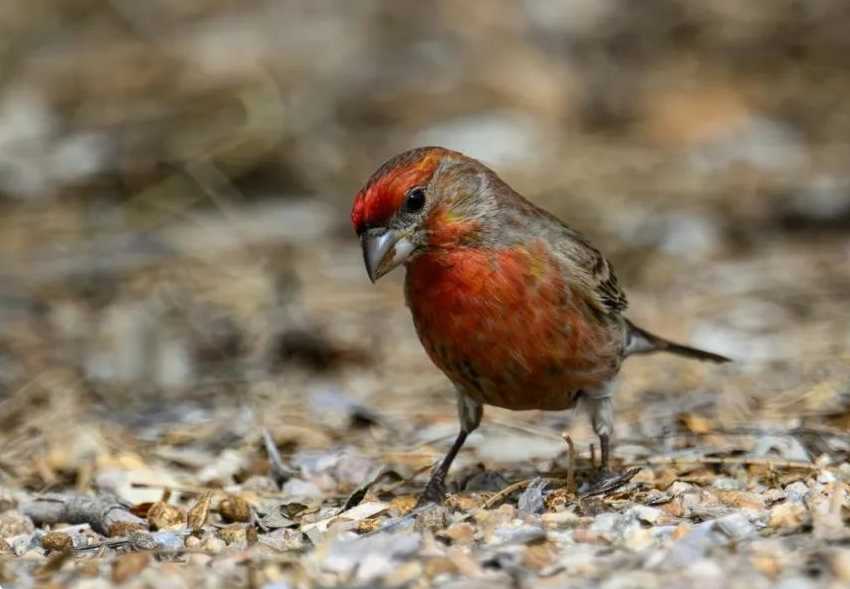
The House Finch (Haemorhous mexicanus), a lively songbird, has become a familiar sight across North America, captivating onlookers with its vibrant plumage and cheerful melodies. Originally native to the western United States and Mexico, this species has expanded its range significantly, thriving in both urban and rural environments.


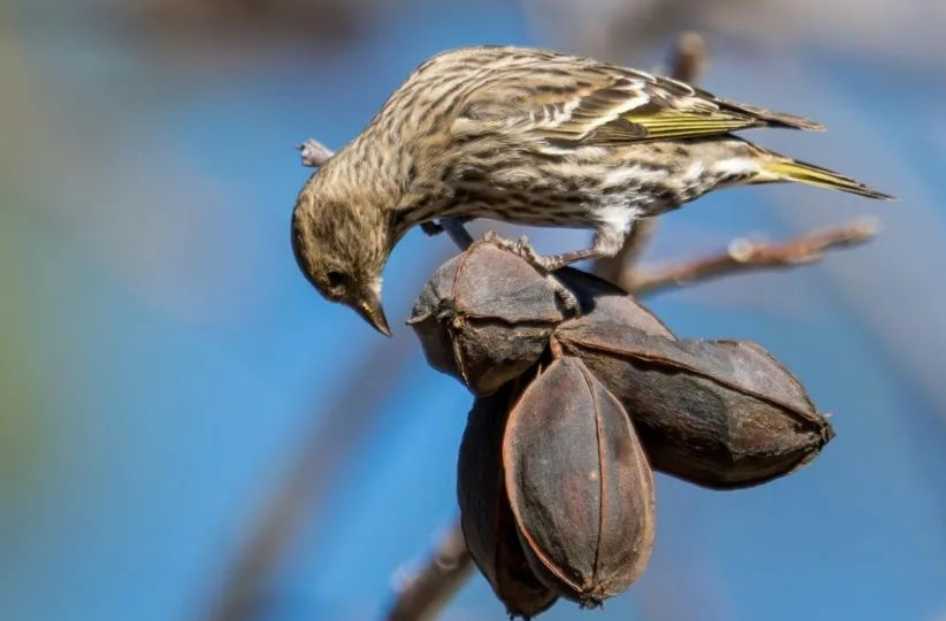
Adult male House Finches are particularly striking, with bright red plumage on their heads, chests, and rumps, which varies in intensity depending on their diet rich in carotenoid pigments. Their backs and wings are brown with dark streaks, providing a contrast to the vivid red patches. Females, in contrast, display a more subdued appearance, with brown, streaked plumage all over, enabling them to blend into their surroundings during nesting. Measuring around 12–15 centimeters in length, these medium - sized birds have short, conical bills perfectly adapted for cracking seeds, their primary food source, though they also consume insects and berries.


House Finches are highly adaptable when it comes to habitats. They flourish in suburban gardens, city parks, agricultural fields, and open woodlands. Their range has expanded dramatically since their introduction to the eastern United States in the 1940s. Initially kept as caged birds, some escaped or were released in New York City, and from there, they spread across the eastern half of the continent. In the wild, they form large flocks, especially during the non - breeding season, and can often be seen feeding at bird feeders or foraging on the ground for fallen seeds. During the breeding season, males sing complex, warbling songs to attract mates and establish territory. Females build cup - shaped nests using twigs, grass, and feathers, usually in trees, shrubs, or even on building ledges. They lay clutches of 2–6 pale blue or greenish - white eggs, which both parents incubate and care for.


Despite their success, House Finches face challenges such as competition for resources and threats from diseases like Mycoplasmal Conjunctivitis, which can cause eye infections and impact their survival. Conservation efforts focus on monitoring their health and ensuring the availability of diverse food sources and nesting sites. As a species that has seamlessly integrated into human - dominated landscapes, the House Finch serves as a reminder of nature’s resilience and the dynamic relationship between wildlife and urbanization.
Latest Stories
Astro Information2 minute readResembling a double-bladed lightsaber, this stunning Hubble Space Telescope image captures Herbig-Haro 24 (HH 24)—a half-light-year-wide jet erupting from a newborn star in the Orion B molecular cloud complex, ~1,300 light-years (400 parsecs) from Earth. HH 24 exemplifies the violent beauty of star birth, where invisible forces carve luminous pathways through interstellar space.
Feline News2 minute readThe Oriental Shorthair, a breed celebrated for its striking elegance and dynamic personality, traces its origins to mid-20th century breeding programs in the UK and the US2. Developed as a close relative of the Siamese, these cats emerged from intentional crossbreeding with British Shorthairs and Abyssinians to create a feline with the Siamese’s sleek physique but expanded coat color possibilities28. By the 1970s, the breed gained international recognition, captivating cat lovers worldwide with its unique charm.
Bird Information1 minute readLiving primarily in tropical oceans, frigatebirds boast wingspans exceeding 2 meters, with males sporting a distinctive red throat pouch that inflates like a scarlet balloon during courtship. These avian marvels are renowned for their ability to fly continuously for two months without touching water—even sleeping mid-air.
Feline News1 minute readNICOSIA, Cyprus – Roaming freely through the streets, ancient ruins, and coastal villages of Cyprus, a distinctive feline with amber or tabby coats has become an iconic symbol of the island. These are Cyprus cats, often hailed as "living fossils" and cherished as a unique part of the Mediterranean nation’s heritage.
Astro Information1 minute readSegue 2, a diminutive galaxy spanning just 220 light-years and hosting fewer than 1,000 stars, stands in stark contrast to giants like IC 1101—making it appear as cosmic "stardust." Scientists suspect this tiny entity is an early-universe "relic," gravitationally bound to the Milky Way, forever stunted in its growth.
Canine News2 minute readThe American Pit Bull Terrier originated in 19th-century England, initially bred by crossing bulldogs with terriers for blood sports like bull-baiting and dog fighting. In the mid-19th century, it arrived in the U.S. with immigrants and was gradually refined into a farm working dog and family companion. While not officially recognized by the American Kennel Club (AKC), it is registered as a distinct breed by the United Kennel Club (UKC) and the American Dog Breeders Association (ADBA
Feline News1 minute readThe Serengeti cat, a captivating breed celebrated for its striking resemblance to the African serval, has been gaining global attention among cat enthusiasts. Developed in the late 20th century through selective breeding—primarily crossing Bengal cats with Oriental Shorthairs—this breed was crafted to embody the grace of wild felines while maintaining a domesticated temperament.