In the diverse world of flora, the Drooping Lily, also known as Hibiscus schizopetalus, stands out as a captivating and exotic plant that has charmed gardeners and nature enthusiasts alike.
Native to East Africa's tropical regions, this evergreen shrub has made its way to gardens across the globe. Standing at up to 3 meters tall, it features slender, often drooping branches. The leaves are oval or oblong in shape, with a smooth texture and a rich green color. Measuring around 4 - 7 centimeters in length and 1.5 - 4 centimeters in width, they add an elegant backdrop to the plant's most alluring feature - its flowers.
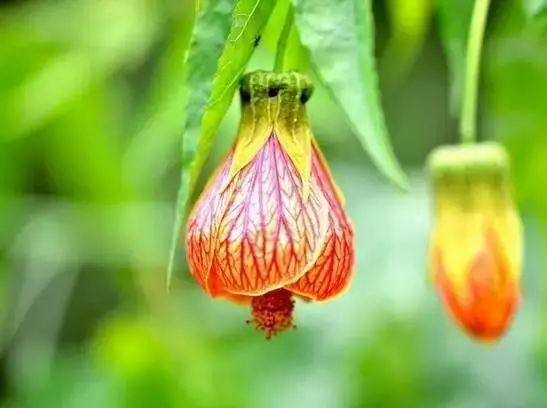
The flowers of the Drooping Lily are truly a sight to behold. They hang delicately from the branches, with each bloom sitting singly at the end of a long, thin, and gracefully drooping stalk, which can be 8 - 14 centimeters long. The flower calyx is tubular, approximately 1.5 centimeters in length, with fine hairs and a tendency to split on one side. The five petals are a vibrant shade of red, each stretching to about 5 centimeters. What makes these petals unique is that they are deeply and finely split into a tassel - like form, gracefully curving upwards. The long, protruding stamen column, which can reach 9 - 10 centimeters, dangles downwards, adding to the flower's overall charm. With their vivid color and unique shape, these flowers resemble exquisite lanterns gently swaying in the breeze. Blooming throughout the year, they bring a continuous touch of warmth and color to any garden.
After flowering, the plant produces long, cylindrical capsules, about 4 centimeters in length and 1 centimeter in diameter, which add an interesting element to its appearance even after the flowers fade.
In cultivation, the Drooping Lily thrives in tropical and subtropical climates. It is a popular choice in gardens in regions such as Taiwan, Fujian, Guangdong, Guangxi, and southern Yunnan in China. This plant is highly valued as an ornamental in tropical countries. It is often planted near ponds, in front of houses, along paths, or against walls in the south, where its continuous blooms create a festive atmosphere. In the Yangtze River Basin and northern regions of China, it can be potted and placed on balconies or in courtyards. With sufficient sunlight, its ornamental period can be extended, making it one of the main potted plants for public display during summer and autumn.
The Drooping Lily is also relatively easy to care for. It prefers well - drained, fertile soil and plenty of sunlight. While it can tolerate some shade, it will produce more abundant and vibrant flowers in sunny locations. Regular watering is necessary to keep the soil moderately moist, especially during dry periods. However, over - watering should be avoided to prevent root rot. Pruning can be done to maintain its shape and encourage bushier growth. In colder climates, it may need protection from frost, as it is not frost - tolerant.
Beyond its aesthetic appeal, the Drooping Lily also plays a role in the ecosystem. Its nectar - rich flowers attract various pollinators, such as bees and butterflies, which contribute to the pollination process and help maintain biodiversity in the garden. Additionally, in traditional medicine in some regions, certain parts of the plant are used for their potential medicinal properties, though this should be approached with caution and under the guidance of professionals due to potential toxicity.
Whether admired for its beauty in a garden setting or studied for its ecological and cultural significance, the Drooping Lily continues to be a source of fascination and inspiration, a true gem in the world of botany.