Interstellar Medium: The Invisible Fog Shaping Astronomical Observations


Astro Information
Interstellar Medium: The Invisible Fog Shaping Astronomical Observations

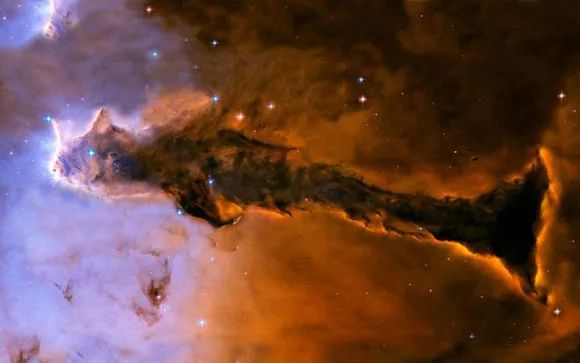
The dimming of starlight as it traverses interstellar space reveals a key cosmic truth: the universe’s vast empty spaces are not truly vacuums but filled with sparse, yet significant, matter. This phenomenon, observed through centuries of astronomical study, highlights the presence of the interstellar medium (ISM)—a diffuse mixture of gas, dust, and cosmic rays that permeates the space between stars.


Although the ISM is extraordinarily tenuous, with an average of just 0.1 to 1 atom per cubic centimeter—far emptier than the best artificial vacuums created on Earth—it plays a crucial role in galactic dynamics. The matter within this medium exists in various forms, including ionized hydrogen (plasma), neutral atomic hydrogen, molecular clouds, and tiny dust particles composed of silicates, carbon, and ice. While individually negligible, these components collectively absorb, scatter, and re-emit electromagnetic radiation, altering the appearance of distant stars and galaxies. This effect, known as interstellar extinction, causes stars to appear dimmer and redder than they actually are, much like how Earth’s atmosphere hazes distant mountain ranges.


For astronomers, the ISM poses both challenges and opportunities. Its obscuring effects complicate observations of distant celestial objects, requiring sophisticated techniques to correct for extinction and uncover the true properties of stars and galaxies. However, studying the ISM also provides insights into the lifecycle of galaxies. Dense regions within the medium, such as molecular clouds, are the birthplaces of new stars, where gravitational collapse leads to protostar formation. Meanwhile, stellar winds and supernova explosions enrich the ISM with heavy elements, recycling matter between generations of stars. Tools like radio telescopes, which can detect hydrogen gas emissions, and infrared observatories, which penetrate dust clouds, have enabled scientists to map the ISM’s structure and composition, revealing its role as a cosmic ecosystem that connects stellar evolution to the broader universe. As technology advances, understanding the interstellar medium remains pivotal to unraveling the mysteries of galaxy formation, cosmic chemistry, and the ultimate fate of stars.
Latest Stories
Astro Information2 minute readResembling a double-bladed lightsaber, this stunning Hubble Space Telescope image captures Herbig-Haro 24 (HH 24)—a half-light-year-wide jet erupting from a newborn star in the Orion B molecular cloud complex, ~1,300 light-years (400 parsecs) from Earth. HH 24 exemplifies the violent beauty of star birth, where invisible forces carve luminous pathways through interstellar space.
Feline News2 minute readThe Oriental Shorthair, a breed celebrated for its striking elegance and dynamic personality, traces its origins to mid-20th century breeding programs in the UK and the US2. Developed as a close relative of the Siamese, these cats emerged from intentional crossbreeding with British Shorthairs and Abyssinians to create a feline with the Siamese’s sleek physique but expanded coat color possibilities28. By the 1970s, the breed gained international recognition, captivating cat lovers worldwide with its unique charm.
Bird Information1 minute readLiving primarily in tropical oceans, frigatebirds boast wingspans exceeding 2 meters, with males sporting a distinctive red throat pouch that inflates like a scarlet balloon during courtship. These avian marvels are renowned for their ability to fly continuously for two months without touching water—even sleeping mid-air.
Feline News1 minute readNICOSIA, Cyprus – Roaming freely through the streets, ancient ruins, and coastal villages of Cyprus, a distinctive feline with amber or tabby coats has become an iconic symbol of the island. These are Cyprus cats, often hailed as "living fossils" and cherished as a unique part of the Mediterranean nation’s heritage.
Astro Information1 minute readSegue 2, a diminutive galaxy spanning just 220 light-years and hosting fewer than 1,000 stars, stands in stark contrast to giants like IC 1101—making it appear as cosmic "stardust." Scientists suspect this tiny entity is an early-universe "relic," gravitationally bound to the Milky Way, forever stunted in its growth.
Canine News2 minute readThe American Pit Bull Terrier originated in 19th-century England, initially bred by crossing bulldogs with terriers for blood sports like bull-baiting and dog fighting. In the mid-19th century, it arrived in the U.S. with immigrants and was gradually refined into a farm working dog and family companion. While not officially recognized by the American Kennel Club (AKC), it is registered as a distinct breed by the United Kennel Club (UKC) and the American Dog Breeders Association (ADBA
Feline News1 minute readThe Serengeti cat, a captivating breed celebrated for its striking resemblance to the African serval, has been gaining global attention among cat enthusiasts. Developed in the late 20th century through selective breeding—primarily crossing Bengal cats with Oriental Shorthairs—this breed was crafted to embody the grace of wild felines while maintaining a domesticated temperament.