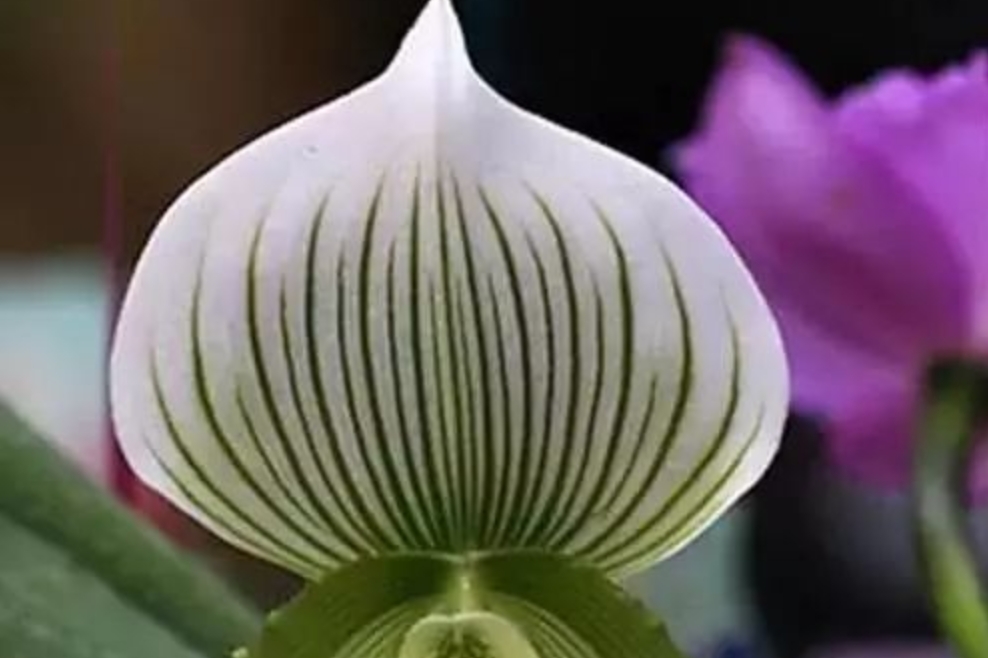
In the world of orchids, few varieties captivate the imagination quite like the Green Maudiae Lady's Slipper Orchid. This stunning plant is a hybrid, resulting from the cross between Paphiopedilum callosum and Paphiopedilum lawrenceanum. Bred by the renowned Charlesworth and Co. in 1900, it has since become a favorite among orchid enthusiasts worldwide.
The Green Maudiae Lady's Slipper Orchid is distinguished by its unique appearance. Its flowers showcase a delicate combination of white and green hues, creating an elegant and fresh aesthetic. The white base color is adorned with intricate green stripes, giving the blossoms a sophisticated look. The green stripes are not only visually appealing but also add to the flower's charm, making each one a work of art. The petals are gracefully shaped, and the characteristic "slipper" - like lip is a defining feature of the Lady's Slipper Orchid genus. This lip, which is large and pouch - like, serves as a landing platform for pollinators. In the case of the Green Maudiae, the lip is green, further enhancing the plant's overall green - themed appearance. The flower stalks are slender and often hold one or more flowers, standing upright and adding to the plant's regal presence.
This orchid variety is relatively easy to cultivate compared to some other orchids, which has contributed to its popularity. It thrives in a well - drained growing medium, such as a mix of bark, sphagnum moss, and perlite. Adequate humidity is crucial, as it mimics the orchid's natural habitat. A humidity level of around 50 - 70% is ideal. Temperature requirements are also important. It prefers intermediate temperatures, with daytime temperatures ranging from 20 - 25°C and nighttime temperatures slightly cooler, around 15 - 20°C. This temperature range helps the plant grow and develop properly. When it comes to light, the Green Maudiae Lady's Slipper Orchid does best in bright, indirect light. Direct sunlight can scorch its leaves, while too little light may result in poor growth and fewer flowers.
Over the years, the Green Maudiae Lady's Slipper Orchid has become a staple in the world of horticulture. It is often used in indoor and outdoor displays, adding a touch of elegance to any setting. Whether placed in a greenhouse, a shaded garden bed, or as a potted plant on a windowsill, it never fails to draw attention. In addition to its aesthetic value, it also plays a role in the ecosystem. Pollinators, such as certain species of bees and flies, are attracted to its nectar - filled flowers. As they visit the flowers in search of nectar, they inadvertently transfer pollen, enabling the orchid to reproduce. However, like many orchid species, it faces threats in the wild due to habitat destruction and over - collection. Conservation efforts are underway to protect the parent species and ensure the continued existence of this beautiful hybrid.
In conclusion, the Green Maudiae Lady's Slipper Orchid is a remarkable plant that combines beauty, elegance, and relative ease of cultivation. Its unique appearance and cultural significance make it a highly sought - after addition to any orchid collection or garden. As we continue to appreciate and protect these botanical treasures, we ensure that future generations can also marvel at the wonders of the Green Maudiae Lady's Slipper Orchid.