Sparkling Icicles, Fiery Red 'Christmas Trees'—The Celestial Spectacle of the Christmas Tree Star Cluster


Astro Information
Sparkling Icicles, Fiery Red 'Christmas Trees'—The Celestial Spectacle of the Christmas Tree Star Cluster

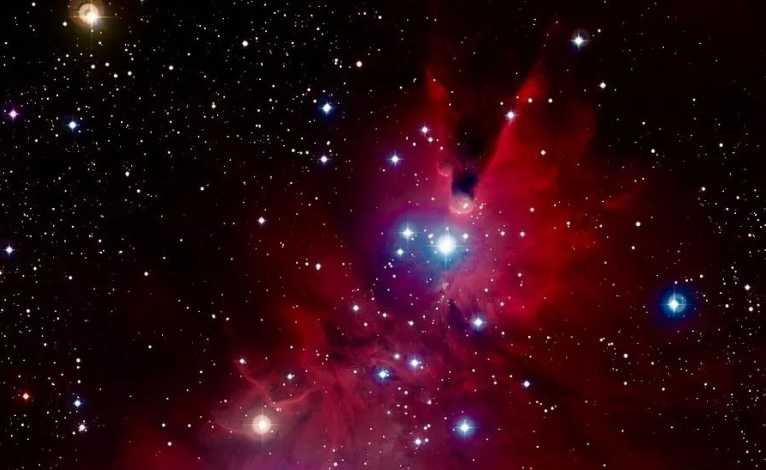
In the cosmic winter wonderland of the southern sky, the Christmas Tree star cluster dazzles observers with its shimmering "icicles" and fiery red "conifers," surrounded by a halo of twinkling stars. Officially known as NGC 2264, this celestial marvel in the constellation Monoceros has captivated stargazers for centuries with its uncanny resemblance to a festive holiday tree adorned with cosmic ornaments.

Sparkling Icicles, Fiery Red 'Christmas Trees'—The Celestial Spectacle of the Christmas Tree Star Cluster


In the cosmic winter wonderland of the southern sky, the Christmas Tree star cluster dazzles observers with its shimmering "icicles" and fiery red "conifers," surrounded by a halo of twinkling stars. Officially known as NGC 2264, this celestial marvel in the constellation Monoceros has captivated stargazers for centuries with its uncanny resemblance to a festive holiday tree adorned with cosmic ornaments.
 
Source: Images from the Internet, if there is any infringement, please contact the removal of


A Cosmic Holiday Masterpiece in the Stars

NGC 2264 earns its yuletide nickname from two distinct features: the Cone Nebula at its base, resembling a tree trunk, and the Fox Fur Nebula above, where glowing gas and dust form "branches" illuminated by young, hot stars. The "icicles" are actually dense columns of cold gas and dust, while brilliant blue stars act as "twinkling lights," contrasting with red hydrogen emissions that paint the "tree" in festive hues.


Astronomers explain this visual magic as a young star-forming region, just 2,500 light - years from Earth. The cluster’s hottest stars emit ultraviolet radiation, ionizing surrounding gas to create the nebula’s vibrant glow. Dark dust lanes within the nebula add depth, mimicking tree branches laden with snow.

Stargazing Traditions and Scientific Significance

Visible to the naked eye on clear southern hemisphere nights, the Christmas Tree cluster has inspired holiday stargazing events worldwide. Astronomers use it to study stellar evolution: the cluster’s youngest stars are less than 10 million years old, embedded in the nebula, while older stars have already "grown up" and moved away from their birthplace.


While not endangered, light pollution threatens its visibility for urban observers. Organizations like the International Dark - Sky Association promote preserving night skies to ensure this cosmic Christmas tree remains a celestial gift for generations. As telescopes reveal its intricate details—from newborn stars to collapsing gas clouds—NGC 2264 reminds us that the universe’s most festive displays are also windows into its evolutionary story.
Latest Stories
Astro Information2 minute readResembling a double-bladed lightsaber, this stunning Hubble Space Telescope image captures Herbig-Haro 24 (HH 24)—a half-light-year-wide jet erupting from a newborn star in the Orion B molecular cloud complex, ~1,300 light-years (400 parsecs) from Earth. HH 24 exemplifies the violent beauty of star birth, where invisible forces carve luminous pathways through interstellar space.
Feline News2 minute readThe Oriental Shorthair, a breed celebrated for its striking elegance and dynamic personality, traces its origins to mid-20th century breeding programs in the UK and the US2. Developed as a close relative of the Siamese, these cats emerged from intentional crossbreeding with British Shorthairs and Abyssinians to create a feline with the Siamese’s sleek physique but expanded coat color possibilities28. By the 1970s, the breed gained international recognition, captivating cat lovers worldwide with its unique charm.
Bird Information1 minute readLiving primarily in tropical oceans, frigatebirds boast wingspans exceeding 2 meters, with males sporting a distinctive red throat pouch that inflates like a scarlet balloon during courtship. These avian marvels are renowned for their ability to fly continuously for two months without touching water—even sleeping mid-air.
Feline News1 minute readNICOSIA, Cyprus – Roaming freely through the streets, ancient ruins, and coastal villages of Cyprus, a distinctive feline with amber or tabby coats has become an iconic symbol of the island. These are Cyprus cats, often hailed as "living fossils" and cherished as a unique part of the Mediterranean nation’s heritage.
Astro Information1 minute readSegue 2, a diminutive galaxy spanning just 220 light-years and hosting fewer than 1,000 stars, stands in stark contrast to giants like IC 1101—making it appear as cosmic "stardust." Scientists suspect this tiny entity is an early-universe "relic," gravitationally bound to the Milky Way, forever stunted in its growth.
Canine News2 minute readThe American Pit Bull Terrier originated in 19th-century England, initially bred by crossing bulldogs with terriers for blood sports like bull-baiting and dog fighting. In the mid-19th century, it arrived in the U.S. with immigrants and was gradually refined into a farm working dog and family companion. While not officially recognized by the American Kennel Club (AKC), it is registered as a distinct breed by the United Kennel Club (UKC) and the American Dog Breeders Association (ADBA
Feline News1 minute readThe Serengeti cat, a captivating breed celebrated for its striking resemblance to the African serval, has been gaining global attention among cat enthusiasts. Developed in the late 20th century through selective breeding—primarily crossing Bengal cats with Oriental Shorthairs—this breed was crafted to embody the grace of wild felines while maintaining a domesticated temperament.